
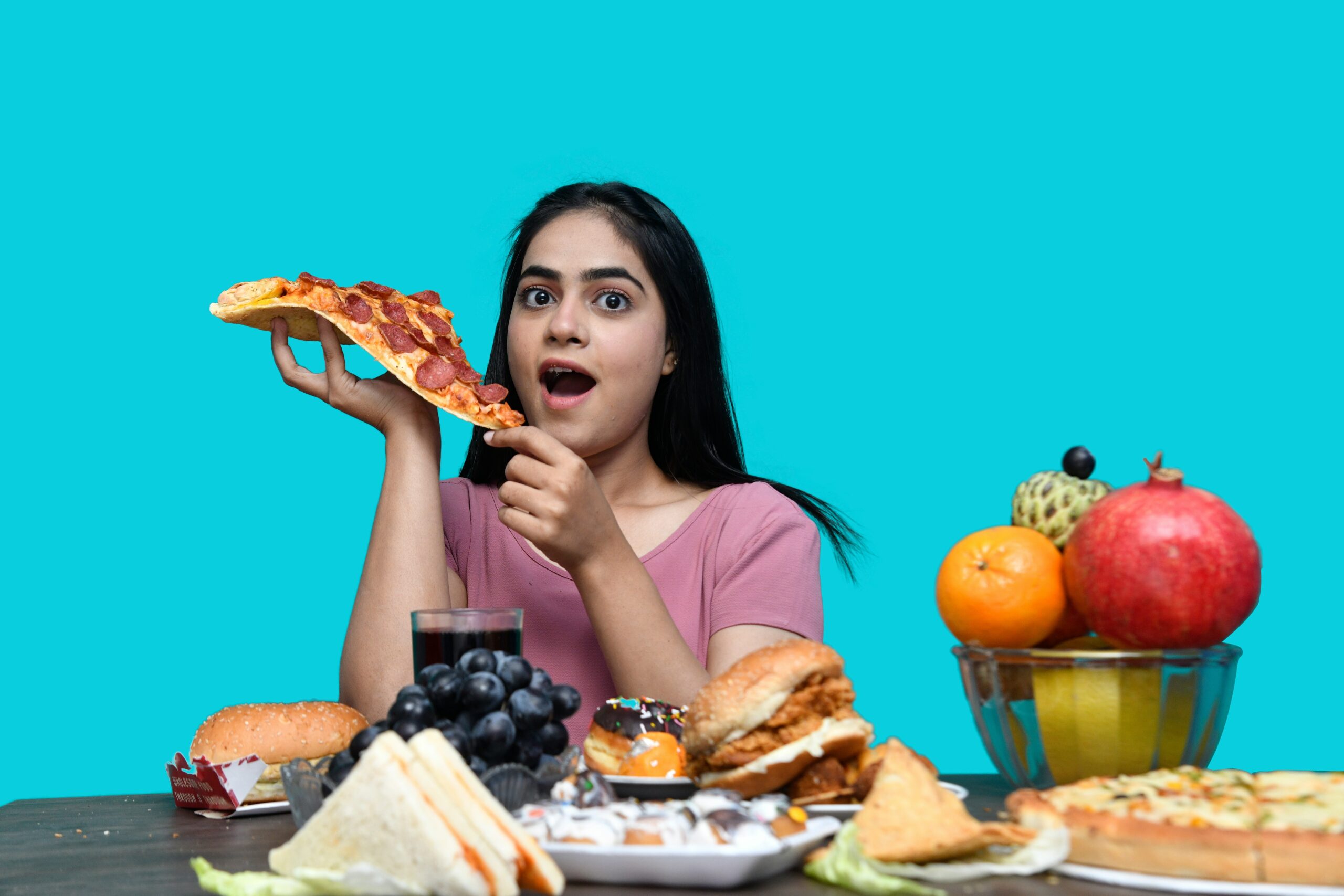
Often, you may end up eating more, which can derail your weight-loss goals. You can get stuck in an unhealthy cycle where the real problem is never solved. But the good news is that you can manage your eating habits and stay on track with your health goals.
What Is Emotional Eating?
A simple way to think about it is this: physical hunger builds slowly, while emotional hunger feels sudden and urgent. You may also crave very specific foods, like chips, chocolate, ice cream, or fried snacks, rather than just “any food.”
Ask Yourself: Are You an Emotional Eater?
- Do you eat on the spot when it feels overwhelming or stressful?
- Do you crave certain comfort foods when your mood drops?
- Do you reward yourself with food?
- Do you keep eating even when you are already full?
- Do you feel guilt, regret, or shame afterward?
If you nodded at more than one of these, your eating pattern may be emotionally driven. That does not mean you have failed. It simply means food has become your default comfort.
Emotional Eating vs. Mindful Eating
Emotional eating is automatic. You eat to soothe a feeling, not to answer hunger. Mindful eating is different. It asks you to slow down, notice your hunger cues, and choose food mindfully rather than impulsively.
With mindful eating, you pause before reaching for a snack and ask, “Am I actually hungry, or am I stressed, bored, tired, or lonely?” That tiny pause can change everything.
Identify Your Emotional Eating Triggers
1. Stress
2. Food as a Coping Mechanism
3. Boredom or Loneliness
4. Childhood Habits
5. Social Influences
Celebrations, family gatherings, office parties, and social pressure can also trigger overeating. You may eat because everyone else is eating, or because certain foods feel tied to comfort and belonging.
How to Overcome Emotional Eating
- Pause before you eat and ask whether you are truly hungry.
- Tame stress with deep breathing, yoga, meditation, a walk, or stretching.
- Find a non-food comfort tool, like journaling, calling a friend, or stepping outside.
- Keep healthier snacks ready, so you are not forced into impulse choices.
- Lean on support from trusted people if you feel stuck.
Conclusion
You do not have to stop eating for comfort forever. You only need to stop using food as the first answer to every feeling. With awareness, small daily pauses, and kinder coping habits, you can build a healthier relationship with food and with yourself.
For the Letter E. This post is a part of BlogchatterA2Z Challenge 2026.









This is so important, especially today when we’re surrounded by stressors and food deliveries are just 10 minutes away! Thanks for the post!
Yes it’s so relevant and need of the hour. I’m glad you liked reading the post.